ChocoFuture Project
Collaborative Innovation in Cocoa/Chocolate Products:
Exploring Sustainable Alternatives between Belgium and Turkey
An Erasmus+ KA210-VET project.
Small-scale partnerships in vocational education and training
Project description
The ChocoFuture project was launched in 2025 because cocoa and chocolate producers are facing strong pressure from climate change, volatile cocoa availability and high raw material costs, while consumers and companies increasingly ask for healthier and more sustainable chocolate products. The partnership addressed the need for practical alternatives to cocoa, sugar and conventional flavor concepts, without losing product quality, taste or texture. The project also responded to the need for accessible vocational learning, especially for small-scale stakeholders and women entrepreneurs, and for stronger awareness of biodiversity, sustainable sourcing and cultural food heritage.
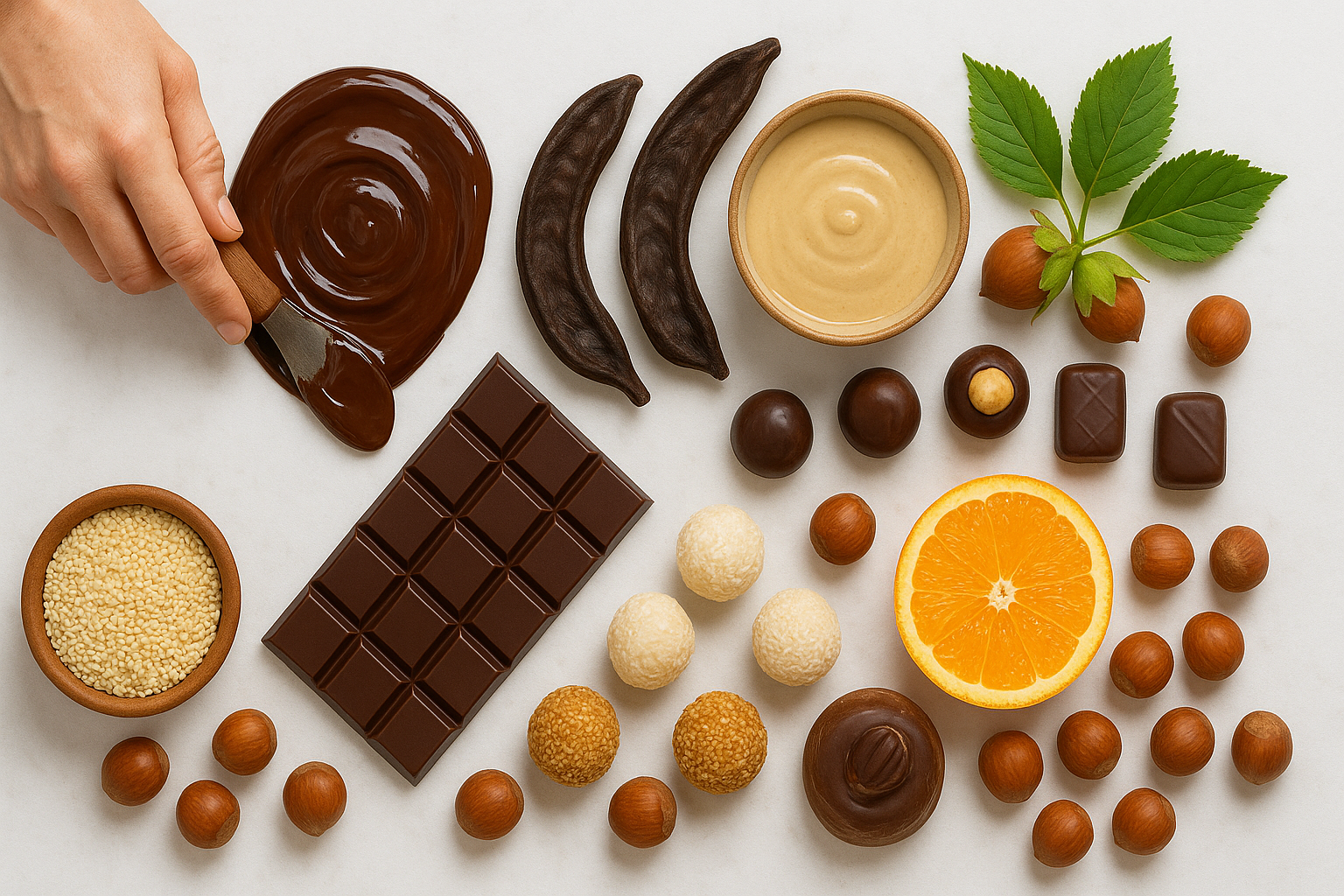
The project aimed to create a practical bridge between Belgian chocolate expertise and Turkish agricultural and culinary heritage. The main project objectives were to raise awareness of the environmental challenges affecting cocoa, to explore sustainable and healthier alternatives for cocoa- and sugar-based chocolate products, and to support innovation through the use of Turkish ingredients such as carob, tahini, nuts, citrus and local by-products. The partnership also aimed to strengthen vocational skills: Belgian participants would learn about alternative raw materials and flavor concepts, while Turkish participants would gain knowledge of bean-to-bar chocolate processing, quality control, sensory evaluation and product development. A further objective was to connect Belgian producers with Turkish farmers and food entrepreneurs, stimulate new business and research collaborations and create transferable learning and dissemination materials that remain useful after the project.
The project was implemented through five linked activities, taken place during May 1, 2025 to April 30, 2026:
The partners prepared and conducted survey studies to understand needs, awareness and expectations related to cocoa alternatives, sugar reduction, sustainability and local ingredients.
A first training and hands-on session was organised in Belgium in November 2025, combining theoretical input, sensory evaluation and practical demonstrations on integrating Turkish ingredients in chocolate and confectionery applications.
A second training and hands-on session was organised in Turkey in April 2026, focusing on high-quality chocolate production, bean-to-bar principles, sensory quality and the use of local raw materials in value-added products.
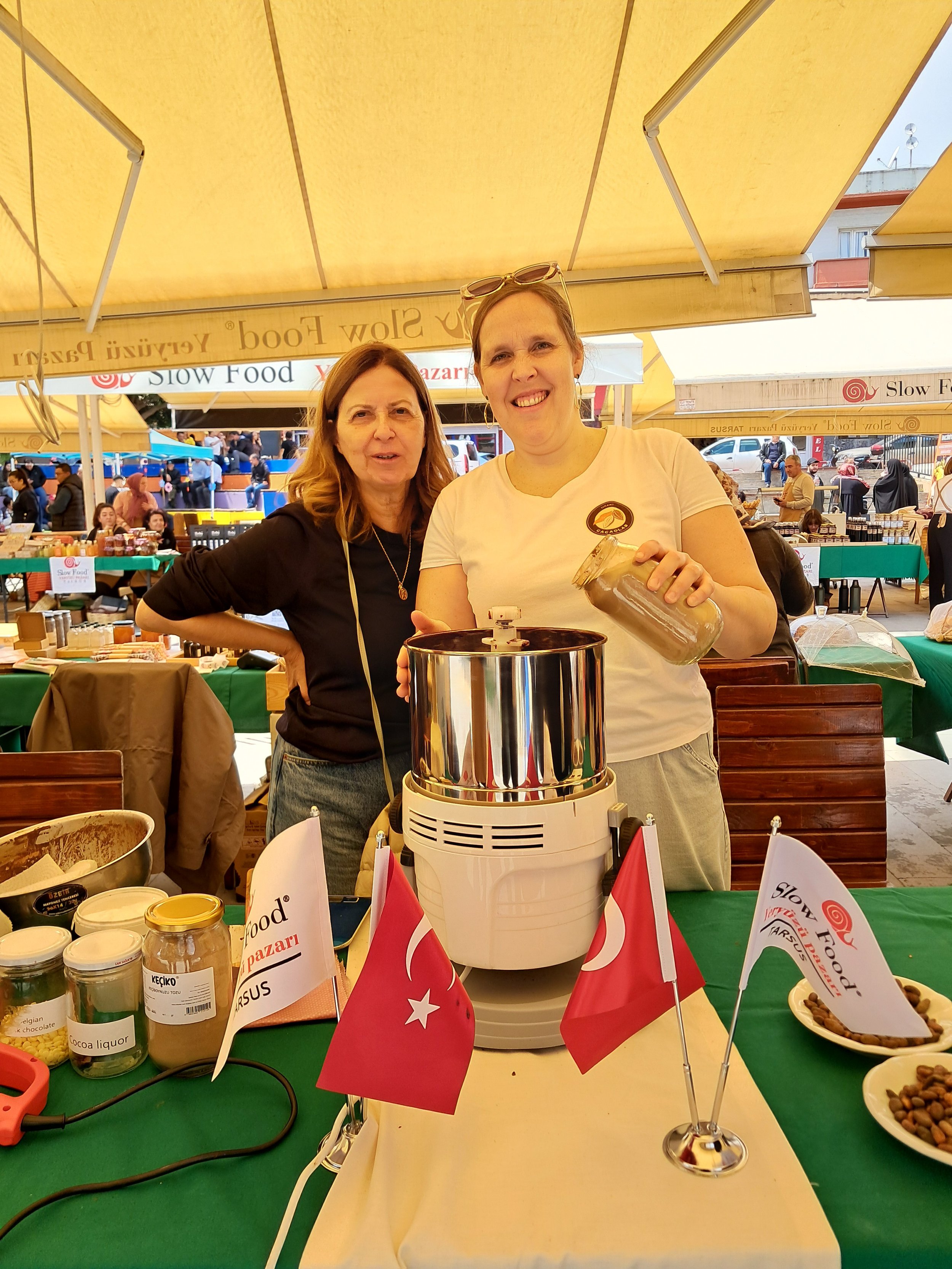
In April 2026, an Earth Market activity in Turkey connected local farmers, chefs, entrepreneurs, consumers and Belgian participants through stands, workshops and tasting moments. Finally, promotional activities shared the project messages, results and learning through partner channels, websites, social media and stakeholder networks.
The project delivered several concrete outputs and results. A multi-stakeholder survey involving consumers, industry stakeholders in Belgium and Turkey and Turkish farmers provided detailed insights into market needs, sustainability awareness and opportunities for alternative ingredients such as carob. Two hands-on training workshops (in Belgium and Turkey) equipped 36 participants in total with practical and theoretical knowledge on innovative and sustainable chocolate production, including the integration of locally available ingredients. Participants developed and pitched new product concepts, leading to the selection of candidates for further project activities. The Earth Market event enabled real-life testing and dissemination of project outputs, including tasting sessions of products developed during the workshops and demonstration of a carob-based chocolate alternative, while fostering direct exchange between Belgian participants and Turkish farmers and entrepreneurs. Finally, promotional activities ensured wide dissemination of results through social media and partner networks, increasing awareness of sustainable chocolate production and strengthening collaboration between stakeholders.
Project partners
Cacaolab (Belgium)
Project coordinator
Konya Food and Agriculture University (Turkey)
Project partner
Tarsus Slow Food (Turkey)
Project partner
Activity 1 - Survey studies
Within the project a multi-stakeholder survey was conducted, aiming at gathering insights on chocolate consumption, innovation opportunities, sustainability, and the use of alternative ingredients. The surveys targeted consumers, chocolatiers, chocolate entrepreneurs, industry stakeholders in Belgium and Turkey, and, in Turkey, also local farmers and agri-entrepreneurs.
Activity 3 - Workshop in Turkey
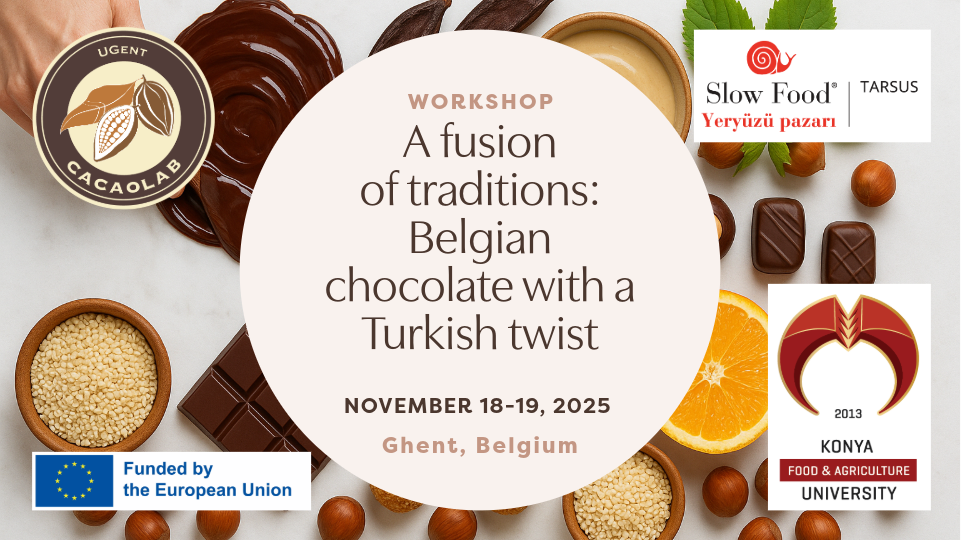
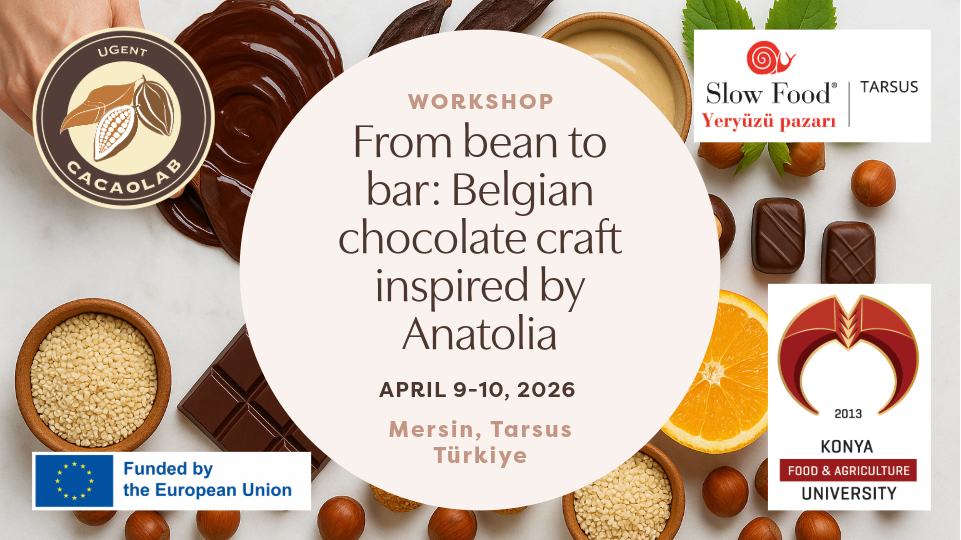
In April 2026, a 2-day training and hands-on workshop was organized at the Gastronomy Center in Tarsus, Turkey. The downloadable materials combine theoretical knowledge and practical guidance on chocolate and praline production, with a focus on bean-to-bar processes, cacao selection, aroma profiling, quality standards and sensory evaluation. The presentations also highlight the integration of traditional Turkish ingredients into innovative chocolate products. They serve as valuable training resources for chocolatiers, entrepreneurs, farmers, and gastronomy professionals.
Activity 5 - Promotional activities
Activity 5 focused on the promotion and dissemination of the ChocoFuture project and its results. The project partners communicated activities, outcomes and key messages through social media, partner networks, visual communication materials and this dedicated webpage. The aim was to increase awareness of sustainable chocolate production, alternative ingredients such as carob, and the cooperation between Belgium and Turkey.
Activity 2 - Workshop in Belgium
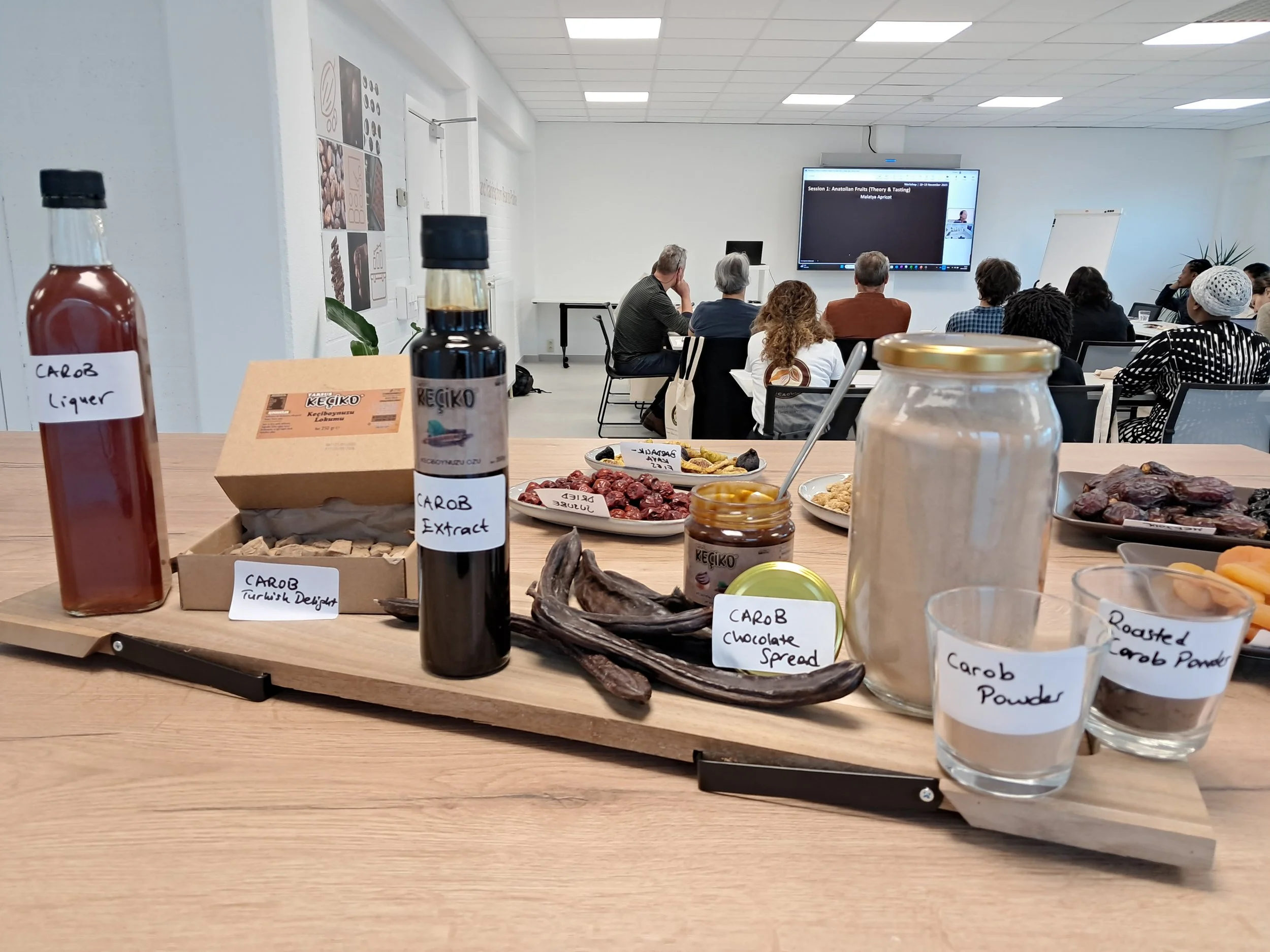
In November 2025, a 2-day training and hands-on workshop was organized at Cacaolab in Belgium. The downloadable materials cover both theoretical insights and practical applications related to the use of alternative ingredients, such as carob, tahini, traditional fruits, nuts, and their by-products, in chocolate and praline making. They serve as educational resources for chocolatiers, entrepreneurs, and industry professionals seeking to diversify and improve their chocolate products through the integration of novel raw materials.
Activity 4 - Earth market in Turkey
The video shows the story of how a small Slow Food Earth Market in Turkey became a part of an international story that connected local traditions with global issues. On April 12, 2026, Belgian patissiers, chocolatiers and teachers exchanged knowledge and ideas with local Turkish producers and entrepreneurs on the Slow Food Earth Market in Tarsus, Mersin in Turkey, with the idea to combine Belgian chocolate expertise with the rich ingredients of this region. Carob, tahini, citrus fruits, nuts and the ancient flavors of Anatolia are meeting chocolate in creative new ways.
Want to see more?
Link to LinkedIn page of Cacaolab: https://www.linkedin.com/company/cacaolab
Link to the Instagram page of Cacaolab: