
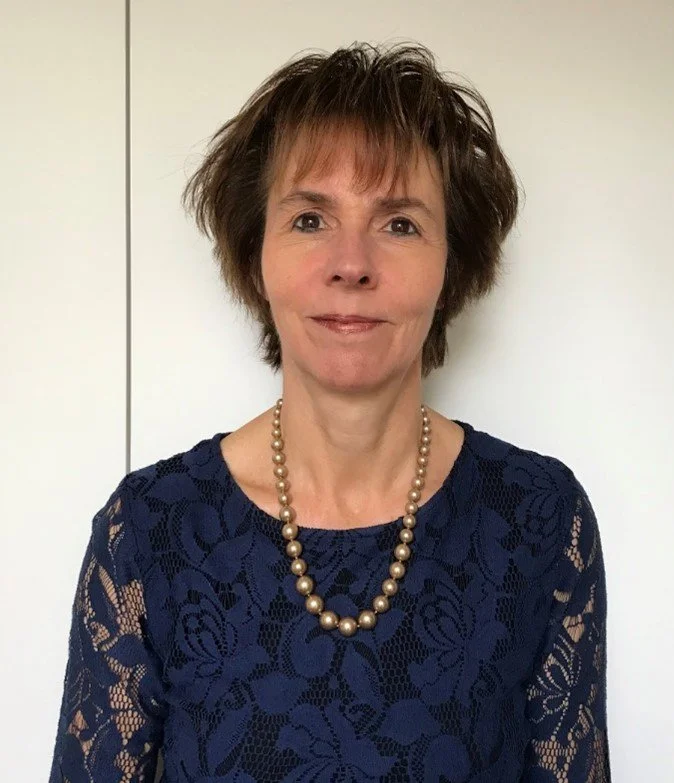
Dr. ir. Els Verdonck

TA Instruments - a Division of Waters, Belgium

Els Verdonck obtained a degree in chemical engineering and a PhD at the Free University of Brussels (VUB) in 1993. For almost 10 years she performed research at the VUB in the field of polymer characterization, with emphasis on the curing of thermosets, interphase in composite materials, structure-property relationships in engineering thermoplastics. DSC and MDSC were used as major characterization tools for that purpose.

Subsequently she was active in synthetic textile fiber research at Centexbel.

Els joined TA Instruments in 1998. She is responsible for thermal analysis application support in Benelux and Europe North. Main occupations are sample analysis with different thermal analysis techniques, application support to TA customers, organization of training courses and application seminars.

About the lecture

A Guide to DSC and MDSC in Food Applications

This lecture provides insights into Differential Scanning Calorimetry (DSC), along with illustrative examples of its application in food science. DSC measures the difference in heat flow between a sample and an inert reference as a function of time and temperature during heating, cooling, or isothermal conditions. It detects all physical and chemical transitions involving endothermic or exothermic events, as well as changes in specific heat capacity - capturing both the temperature and enthalpy of these transitions.

In food materials, DSC can reveal critical information such as melting and crystallization temperatures, crystallinity, polymorphic transitions, protein denaturation, and starch gelatinization. These insights are valuable for material selection, formulation and process optimization, product fingerprinting, competitive analysis, and troubleshooting during manufacturing.

Modulated DSC (MDSC) enhances traditional DSC by applying a sinusoidal modulation to the heating rate. This allows for the separation of overlapping thermal transitions, enabling more accurate interpretation of complex thermal events.